Agfa HealthCare launched its new DR 100s digital radiography (DR) system at RSNA 2019 in Chicago.
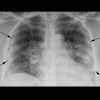
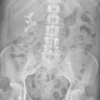
The system has high DR image quality, fast image preview, and a range of applications, including chest, abdomen, skeletal, and long-length stitching exams, to improve productivity while supporting patient care, the firm said.
The motor-driven and compact DR 100s is 22.8-inches wide and has a FreeView collapsible telescopic column, making it easier to maneuver. Adding to the machine's efficiency are the position of its power plug, storage for necessities (gloves, sanitizer, etc.), an integrated detector battery charger, and security locks on detectors and the remote exposure switch.
The tube head incorporates ZeroForce technology to make movement easier and the 10-inch tube head display also allows for bedside adjustments and gives the operator access to patient data, generator settings, and image previews.
DR 100s comes equipped with the Musica acquisition workstation, which offers a single interface for imaging on a 22-inch touchscreen monitor that can be angled to eliminate light reflection. Patient data and exposure parameters are automatically added to the digital image and included in the DICOM information for review.

![Representative example of a 16-year-old male patient with underlying X-linked adrenoleukodystrophy. (A, B) Paired anteroposterior (AP) chest radiograph and dual-energy x-ray absorptiometry (DXA) report shows lumbar spine (L1 through L4) areal bone mineral density (BMD). The DXA report was reformatted for anonymization and improved readability. The patient had low BMD (Z score ≤ −2.0). (C) Model (chest radiography [CXR]–BMD) output shows the predicted raw BMD and Z score in comparison with the DXA reference standard, together with interpretability analyses using Shapley additive explanations (SHAP) and gradient-weighted class activation maps. The patient was classified as having low BMD, consistent with the reference standard. AM = age-matched, DEXA = dual-energy x-ray absorptiometry, RM2 = room 2, SNUH = Seoul National University Hospital, YA = young adult.](https://img.auntminnie.com/mindful/smg/workspaces/default/uploads/2026/04/ai-children-bone-density.0snnf2EJjr.jpg?auto=format%2Ccompress&fit=crop&h=100&q=70&w=100)


![Representative example of a 16-year-old male patient with underlying X-linked adrenoleukodystrophy. (A, B) Paired anteroposterior (AP) chest radiograph and dual-energy x-ray absorptiometry (DXA) report shows lumbar spine (L1 through L4) areal bone mineral density (BMD). The DXA report was reformatted for anonymization and improved readability. The patient had low BMD (Z score ≤ −2.0). (C) Model (chest radiography [CXR]–BMD) output shows the predicted raw BMD and Z score in comparison with the DXA reference standard, together with interpretability analyses using Shapley additive explanations (SHAP) and gradient-weighted class activation maps. The patient was classified as having low BMD, consistent with the reference standard. AM = age-matched, DEXA = dual-energy x-ray absorptiometry, RM2 = room 2, SNUH = Seoul National University Hospital, YA = young adult.](https://img.auntminnie.com/mindful/smg/workspaces/default/uploads/2026/04/ai-children-bone-density.0snnf2EJjr.jpg?auto=format%2Ccompress&fit=crop&h=112&q=70&w=112)