

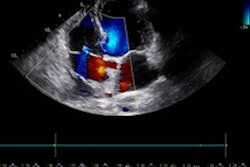
Echocardiography links lower left atrial function -- as opposed to the size of the left atrium -- to an increased risk of dementia later in life, according to research published March 22 in JAMA.
Left atrial function, though not size, on echo exams could be considered a risk factor pending more evidence, wrote a team led by Wendy Wang, a doctoral student in epidemiology from the University of Minnesota.
"To our knowledge, this is the first study to report an independent association between echocardiographic measures of left atrial function with dementia," Wang and colleagues wrote. "Left atrial function has prognostic value for cardiovascular events that is over and above that provided by left atrial size."
Alterations in size and function for the left atrium, also known as atrial myopathy, lead to myriad heart problems. However, not much is known about atrial myopathy's effects on dementia. The researchers wrote that the link is possible since lower left atrial reservoir function is linked to the presence of silent brain infarcts and white-matter hyperintensities.
Wang et al wanted to use echocardiographic measures of left atrial function and size and see if the association with incident dementia exists. They also wanted to quantify the contribution of atrial function to previous associations.
The team used data from 4,096 participants who were part of the Atherosclerosis Risk in Communities (ARIC) study. Of the participants, 60% were women and 22% were Black. The average age of the subjects was 75. Of the total, 531 dementia cases were found over a median follow-up of six years.
The study authors found statistically significant associations between measures of lower left atrial function and incident dementia comparing the lowest versus highest quintile for several measures. The calculated the hazard ratio for various echo measurements to dementia risk.
| Links between echocardiographic measures of left atrial function and incident dementia | |
| Left atrial measurement | Hazard ratio |
| Reservoir strain | 1.98 |
| Emptying fraction | 1.87 |
| Contractile strain | 1.57 |
| Conduit strain | 1.50 |
| Active emptying fraction | 1.43 |
The team also found that the unadjusted incidence rate difference comparing the lowest versus the highest quintile of left atrial function measures ranged from 2.18 to 3.25 per 100 person-years among measures significantly associated with dementia.
However, they did not find that measures of left atrial size were associated with incident dementia.
Wang and colleagues called for further research to confirm their findings.
In an accompanying editorial, Dr. Shyam Prabhakaran from the University of Chicago and Dr. Philip Greenland from Northwestern University wrote that prospective validation in other study populations is "clearly necessary," and that randomized trials testing patient treatments for atrial myopathy could further establish a causal effect on dementia.
They also wrote that cardiac MRI could better detect atrial function, size, and flow with its higher sensitivity.
"Future studies using cardiac MRI to evaluate the atrial myopathy more completely may identify precisely which aspects of the diseased atrium are most important for development of dementia as well as stroke and atrial fibrillation," they added.




![Examples of ultrasound findings and techniques. (A) Images in a 39-year-old male patient with a mass in the left thigh. The mass is heterogeneous on the B-mode US image (compared with the patient in D) and showed increased microvascularity (superb microvascular imaging [SMI]) and shear-wave elastography (SWE) values. Undifferentiated pleomorphic sarcoma was diagnosed at biopsy (with pleomorphic rhabdomyosarcoma in surgical specimen). (B) Images in an 18-year-old male patient with a mass in the left leg. The mass is hypoechoic on the B-mode image, with no other findings suggestive of malignancy. The lesion is in contact with the cortex of the tibia, which is slightly irregular. CT revealed a doubtful anteromedial tibial erosion. The microvascular study demonstrated high vascularization, suggestive of malignancy. Periosteal Ewing sarcoma was diagnosed with both histologic and immunohistochemical confirmation. (C) Images in a 69-year-old female patient with a lump growing on the outside of the left leg. Multiple SWE examinations were performed (please note the high values obtained in the measurements, whereas the color map highlights the stiffness relative to adjacent tissues). SMI showed areas of increased vascularization to target for sampling. Undifferentiated spindle cell sarcoma was diagnosed at biopsy, with residual leiomyosarcoma in the surgical specimen after neoadjuvant therapy. (D) Images in a 56-year-old female patient with a mass in the right thigh. The mass is heterogeneous at both B-mode ultrasound (similar to patient A) and MRI (coronal T2-weighted spectral attenuated inversion recovery [SPAIR]; T1-weighted pre-contrast and postcontrast imaging), which even shows uptake after the administration of paramagnetic contrast material, which is traditionally suggestive of malignancy. Low values at SMI and elastography are suggestive of benignity. Spindle cell lipoma was diagnosed at biopsy, with atypical spindle cell lipomatous tumor in the surgical specimen.](https://img.auntminnie.com/mindful/smg/workspaces/default/uploads/2026/08/images-radiol250278fig2.APCFLSvX6p.jpg?auto=format%2Ccompress&dpr=2&fit=crop&h=167&q=70&w=250)
