PITTSBURGH -- The Society for Imaging Informatics in Medicine (SIIM) is in the Steel City for its 2026 annual meeting, and the message from leaders across the field is consistent: AI in medical imaging is growing up.
The conversations at this year's conference are centering on deployment, governance, workflow integration, and the hard work of proving that AI tools deliver results from premarket testing to clinical use.
"Imaging AI is at a transition point right now," said Nabile Safdar, MD, outgoing chair of the SIIM board. "We are seeing already mature solutions that are in place in practices around the country, and for that matter, around the world."
Safdar, who is completing a term that started in 2024, pointed to the breadth of AI adoption beyond radiology as one of the most striking developments of recent years. AI tools that have regulatory approval are now in use across ophthalmology, pathology, cardiology, and dermatology. Safdar said this is a sign that imaging informatics has become a cross-specialty discipline.
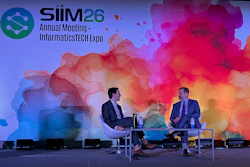
Nabile Safdar, MD, shares his thoughts on new advances in AI that may hold promise in clinical use, as well as what SIIM 2026 has to offer for AI expertise.
But even as established tools proliferate, a new wave of technology is on the horizon. Vision language models and other foundation models, Safdar noted, are showing "incredible promise.” However, he cautioned that these technologies are not yet ready for clinical deployment.
"We're in waiting," he said. "We're just waiting for these to start to show some real commercial promise."
A landmark framework for AI governance
Safdar also praised the May release of the American College of Radiology (ACR)-SIIM Practice Parameter for AI in Imaging. The joint policy document sets up guidelines for how practices should approach AI deployment, evaluation, post-deployment monitoring, and governance.
The practice parameter, along with other ACR resources, was highlighted in the 2026 SIIM-ACR Data Science Summit also held in Pittsburgh.
Safdar called it "a major milestone for all of us in the industry," noting that while the parameter is framed for radiology, its framework is applicable across all clinical specialties and health systems more broadly.
"This serves as a framework that can be used in other areas, in entire institutions," he said. "And we're very proud to have contributed to that."
Energy, community, and the hallway conversation
For Chris Roth, MD, chair of the SIIM Annual Meeting Program Committee, what sets this conference apart is harder to quantify than any policy document or product launch.
"The first thing I would say about the meeting here is that it is not like any other meeting," said Roth, who praised Pittsburgh's convention center and the city's riverfront setting. "I really connect with the people that are here. They connect well with each other."
That sense of community, he argued, is what makes SIIM valuable in an era of rapid technological change. Figuring out what AI tools are worth adopting and which are “smoke and mirrors” requires trust, candor, and peer-to-peer conversation, Roth added.
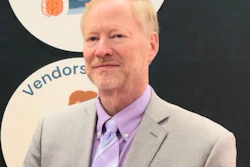
Chris Roth, MD, talks about evidence for optimism toward developing imaging AI tools in the face of financial, resource, and workforce challenges.
Roth also shared his thoughts on financial challenges in imaging AI. Staffing pressures, inflationary costs, and shifting federal regulations are squeezing budgets across health systems, raising the bar for any new technology investment.
"Return on investment, return on health, being able to quantify what is being delivered; that is more important now than I can remember in at least the last decade," he said. "When you find the tool that matters, whether it has AI or not, but certainly some of the AI ones are uniquely powerful right now, you will see them, and if you buy them, you will reap the benefit."
A new chair looks ahead
Incoming SIIM board chair Alex Towbin, MD, takes the helm July 1 with an eye toward workflow intelligence, something he calls the next evolution of the field.
"We are at the cusp of a new generation of technology," said Towbin, a pediatric radiologist and Associate Chief Medical Information Officer at Cincinnati Children's Hospital. "It's all about workflow intelligence, integrating the tools directly to help us cut down the work burden, all those wasted steps that don't add value to the care that we're providing."
Towbin also addressed attitudes from those who are still skeptical of AI's benefits in medical imaging.
"I think they're right to be skeptical," he said, citing high operating costs and employee burnout.
Alex Towbin, MD, talks about the state of AI in radiology and how AI tools can improve imaging workflows.
Some of this has been worsened by poorly implemented technology, he noted. He said the next generation of AI tools must do better by easing the burden while expanding the scope of what AI can assess, moving beyond simple binary yes-or-no answers.
His goals for SIIM's future include expanding the society's multispecialty reach into cardiology, dermatology, ophthalmology, and pathology, while also broadening access for technologists and other imaging professionals at all career stages.
"You belong at SIIM," Towbin said. "Come next year in Nashville [for SIIM 2027]."
Check out AuntMinnie’s full coverage of SIIM 2026 here.