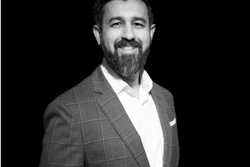
Los Angeles County’s top radiology administrator pushed back against a high-profile comment that AI could replace large numbers of radiologists during an April 12 talk at the ARRS meeting.
Jack Brunner, MD, director of radiology for the Los Angeles County Department of Health Services (DHS), took aim at remarks made by Mitchell Katz, MD, president and chief executive officer of NYC Health + Hospitals -- the largest public safety net system in the country -- who said recently that AI could replace “a great deal” of radiologists if regulatory barriers were cleared.
Brunner, who noted that he once reported to Katz's deputy when Katz led Los Angeles County's DHS, called the suggestion both unrealistic and unhelpful.
"Are comments like that realistic? Are they helpful?" Brunner said. "I'd say no on both accounts."
What is realistic is that the Los Angeles County DHS operates on a $9.2 billion annual budget and is staring down a projected $1.2 billion structural deficit within four years, driven largely by cuts to federal and state funding programs, Brunner said. In that environment, the question of whether AI can actually move the financial needle is significant.
But the system is a capitated, taxpayer-funded safety net system, with revenue largely fixed, which means that any AI-driven savings have to come from costs. The problem is that radiology labor represents less than 1% of Los Angeles County DHS's total budget, Brunner said. So even a fully autonomous AI replacing every radiologist in the system wouldn't improve the bottom line.
"Is that going to save the underlying financials of the health system?" Brunner asked. "Likely not."
Ultimately, also, AI technology itself isn’t ready, Brunner said. He noted barriers including hallucinations, absent infrastructure, and a stiff regulatory environment.
"Do you think all of the plaintiffs' attorneys, all of the legislators out there, all of the lobbying organizations are just going to roll over and allow all of these regulatory changes to occur?" he said. "I think it's an uphill battle."
Katz's comments did have a galvanizing effect on radiologists, Brunner noted.
 A ChatGPT-generated slide presented by Jack Brunner, MD, at ARRS on April 12, as he described fielding a flood of calls and messages from colleagues over Katz's comment. Jack Brunner, MD
Beyond pushing back on Katz’s comments, Brunner outlined a pre- and post-implementation evaluation framework for AI in radiology that includes return on investment modeling, net present value analysis, cost-effectiveness assessment, and ongoing monitoring. He said that model drift and shifting competitive dynamics mean that AI tools will require sustained management well after deployment.
Brunner closed with a call for having radiologists at the administrative table.
“I think those of us who are radiologists in administration really need to force ourselves at the table and make sure that we're part of the decision-making process because hospitals are happy to cut costs, even if it means patient harm, as long as it's legal. That's kind of the message that was sent. That's not appropriate,” he said.