The population-level lung cancer diagnosis rate (LDCR) is higher than that found by the National Lung Screening Trial (NLST) -- and after a shorter follow-up period, according to a study published April 13 in JAMA Network Open.
A group led by Wei Liao, PhD, of Baptist Cancer Center in Memphis, TN, reported a lung cancer diagnosis rate of 4% in a large regional community health care system in the Mississippi Delta, compared to the 3.97% LCDR rate determined by the NLST. This rate was after three years of follow-up, compared to 6.5 years in the NLST.
"[Our] findings suggest that LCS and IPN programs may have greater outcomes associated with LCDRs than projected from clinical trial data," the team wrote.
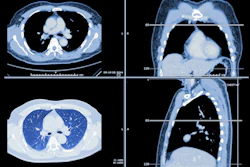
The study included 40,612 patients who had a least one low-dose CT (LDCT) exam for lung cancer screening or any CT scan that identified an incidental pulmonary nodule (IPN) with a diameter of 30 mm or less between January 2015 and June 2024. None of the study participants had prior history of lung cancer. Primary outcome of the research was aggregate LCDRs; secondary outcomes were relative LCDRs categorized by baseline Lung-RADS score (i.e., a lung cancer screening cohort) or nodule size (i.e., an IPN cohort).
Of the total number of participants, 15,754 were enrolled in the LCS cohort and 24,858 in the IPN cohort.
The group reported that the cumulative LCDR at 36 months was 3.8% with a median follow-up of 546 days for the LCS cohort and 4.3% with a median follow-up of 647 days for the IPN cohort. Most patients in the LCS cohort had Lung-RADS scores of 1 or 2 (85.8%). In the IPN cohort, most patients had nodules with a baseline diameter of six mm to 15 mm (51.8%).
It also found the following:
Hazard ratios* (with Lung-RADS 1 to 2 as reference) for diagnosis of lung cancer among two types of cohorts | |
Measure | Adjusted hazard ratio |
LCS cohort | |
| Lung-RADS 3 | 3.38 |
| Lung-RADS 4A | 7.41 |
| Lung-RADS 4B | 25.46 |
| Lung-RADS 4X | 107.22 |
IPN cohort | |
| Nodules less than 6 mm | 0.59 |
| Nodules between 6 mm and 15 mm | 2.66 |
| Nodules greater than 15 mm to 20 mm | 9.93 |
| Nodules greater than 20 mm to 30 mm | 15.65 |
*Adjusted for age, sex, race, insurance, rurality, comorbidities, personal history of non-lung cancer, and family history of lung cancer.
Finally, the researchers found that five-year overall survival was 58% in the LCS group and 46% in the IPN group.
The study implies that "with less than half the duration of follow-up of the NLST, this diverse population showed a similar LCDR as reported in the NLST" -- a result that underscores a need for "multilevel strategies to expand access to early detection," the authors concluded.
Access the full study here.