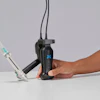
Clinicians should consider automated ultrasound (ABUS) as an effective alternative to handheld ultrasound (HHUS) for screening women with dense breasts, researchers have reported.
The group compared supplemental breast cancer screening outcomes for ABUS versus HHUS, with findings suggesting that ABUS can improve cancer detection.
“The results of our study provide the strongest evidence to date supporting the use of ABUS as an alternative to HHUS for supplemental screening of women with dense breasts,” said study lead Brian Sprague, PhD, of the University of Vermont in Burlington, in an October 8 news release from the American College of Radiology.
There is increasing demand for ultrasound screening in addition to mammography following the enactment of state laws and federal rules requiring radiology clinics to inform women with dense breasts about the limitations of mammography, the ACR noted. While HHUS has long been available for breast imaging, it has drawbacks related to operator dependency and a lack of reproducibility, and studies suggest ABUS may be a reliable alternative. Few studies have compared the techniques head to head, however.
To bridge the gap, Sprague and colleagues analyzed data from 21,110 HHUS and 4,218 ABUS examinations among women with dense breasts conducted between 2017 and 2020 at 27 radiology facilities within three Breast Cancer Surveillance Consortium registries.
According to the results, ABUS was associated with a lower abnormal interpretation rate (14.9% versus 19.2%, p < .0001), a lower short-interval follow-up recommendation rate (3.0% versus 14.6%, p < .0001), and a lower false-positive initial assessment rate (14.6 versus 19.1; p < .0001) compared with HHUS. There were no apparent differences in biopsy recommendation or false-positive biopsy recommendation rate, positive predictive value, or cancer detection rate for ABUS versus HHUS.
"We found that cancer detection rates on ABUS were comparable to, if not better than, those of HHUS," the researchers noted.
Ultimately, because dense tissue and lesions both appear white on a mammogram, abnormalities can more easily go undetected, and thus supplemental screening is crucial. The investigators noted that this is the first study directly comparing the screening performance of ABUS versus HHUS in clinical practice in the U.S.
"[The study] demonstrates that ABUS is a viable alternative to HHUS and can expand supplemental ultrasound screening capacity at radiology clinics," the group concluded.
The full study was published in the October issue of the Journal of the American College of Radiology and is available here.