AISAP is highlighting results from a clinical study that suggests that its deep-learning model can accurately detect valvular disease and ventricular dysfunction using a single, focused ultrasound view.
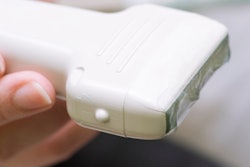
The results, published January 26 in Frontiers in Digital Health, found that the model was effective even when the images were acquired by noncardiologists using handheld devices, AISAP said.
The research used more than 120,000 echocardiographic studies to train the model, which was then validated using data from a prospective cohort of patients. The model achieved an area under the receiver operating curve (AUC) of up to 0.97 for detecting reduced ejection fraction and 0.95 for right ventricular dysfunction.
"By proving that AI can rapidly extract clinically meaningful signatures from minimal ultrasound data, this study confirms that our POCAD platform isn't just a tool for clinicians, it is a potential lifeline for patients," said AISAP CEO and cofounder Adiel Am-Shalom in a company statement.
The study can be accessed here.