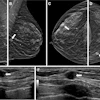
Contrast-enhanced ultrasound (CEUS) could help improve BI-RADS classification of intermediate breast lesions, according to research published February 4 in the Asian Journal of Surgery.
A team led by Jie Tao, MD, from the General Hospital of Western Theater Command in Chengdu, Sichuan, China, found that compared to BI-RADS, CEUS-adjusted BI-RADS led to improved sensitivity. It also reduced the overdiagnosis rate of benign lesions and the simulated secondary resection of intermediate lesions.
“The integration of CEUS with BI-RADS shows promise for distinguishing benign lesions, B3 lesions, imaging-pathologic discordant lesions, high-risk lesions, and malignant lesions prior to biopsy, providing a conceptual framework for optimizing clinical management pathways,” the Tao team wrote.
Histopathological results from core needle or vacuum-assisted biopsy are stratified into five categories ranging from B1 to B5. B3 lesions indicate uncertain malignant potential and have six subtypes: atypical ductal hyperplasia, flat epithelial atypia, classical lobular neoplasia, papillary lesions, radial scars, and phyllodes tumors.
These lesions show significant pathological heterogeneity, and incomplete sampling with either biopsy method can lead to malignancy upgrades after surgery.
Researchers continue to explore how ultrasound could improve BI-RADS assessment of breast lesions to avoid unnecessary biopsies. While ultrasound BI-RADS and CEUS have shown promise in differentiating between malignant and benign breast lesions, data are lacking on ultrasound’s ability to diagnose intermediate lesions such as B3, high-risk, and imaging-pathologic discordant lesions.
Tao and colleagues investigated how combining BI-RADS and CEUS could further improve prebiopsy classification of benign, intermediate, and malignant lesions. Their study included 647 women who underwent conventional ultrasound, CEUS, core needle biopsy, and surgical excision between 2016 and 2023. They incorporated CEUS into BI-RADS to establish two models: the CEUS-adjusted BI-RADS model and the CEUS-BI-RADS scoring model.
The CEUS-adjusted BI-RADS model achieved an overall accuracy of 73.8%. It also achieved sensitivities of 64.5% for benign lesions, 52.2% for intermediate lesions, and 93% for malignant lesions, with corresponding specificities of 83.9%, 43.2%, and 84.2%, respectively.
Compared with the original BI-RADS, the CEUS-adjusted BI-RADS model improved sensitivity for malignancies and the overdiagnosis rate of benign lesions, among other achievements.
Comparison between BI-RADS, CEUS-adjusted BI-RADS | ||
Measure | BI-RADS | CEUS-adjusted BI-RADS |
Sensitivity for malignancies | 87.8% | 93% |
Overdiagnosis rate of benign lesions | 25.1% | 13.3% |
Simulated secondary resection of intermediate lesions | 19.4% | 6.5% |
Underdiagnosis of malignant lesions | 1.2% | 1.2% |
Multivariate analysis showed that irregular shape, earlier enhancement, and iso-/hyperenhancement predicted intermediate lesions. And perfusion defects, irregular shape, earlier enhancement, and post-enhancement size enlargement predicted malignancies.
“Our results showed that the CEUS-adjusted BI-RADS model demonstrated superior comprehensive diagnostic performance in the subgroup analysis compared to all other models, with higher diagnostic efficacy for lesions greater than 25 mm than for lesions 25 mm [or smaller],” the researchers wrote.
The study authors called for prospective multicenter studies to validate their findings and refine the diagnostic accuracy of CEUS-adjusted BI-RADS for broader clinical implementation.
“However, its true clinical application relies on further clinical research,” they added.
Read the full study here.