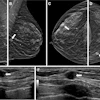
Mammography screening leads to improved survival rates in women with late-stage cancer, suggest findings published February 19 in the Journal of the National Cancer Institute.
Researchers led by Amy Tickle, PhD, from King’s College London in England, reported greater survival in women with screen-detected stage IV cancer compared to women who do not attend mammography screenings.
“Stage-specific survival is a reasonable estimator for mortality in stages I to III, with minimal bias from screening history,” Tickle and colleagues wrote. “However, for stage IV cancers, one should make allowances for better survival in screen-detected cancers.”
The stage of diagnosis is assumed to be independently predictive of breast cancer mortality. This means that a reduction in advanced-stage disease will correspond to a reduction in mortality, underscoring the importance of estimating stage-specific survival by route to diagnosis in order to confirm screening mammography’s benefits.
Tickle and co-authors studied whether breast cancer survival improvements with screening are explained solely by detection at early stages. They also examined whether mortality can be predicted using stage and diagnosis date alone.
The retrospective study included data collected between 2010 and 2022 from 817,128 women from Denmark. Denmark offers biennial breast cancer screening to women ages 50 to 69.
Of the total women, 32,827 had breast cancer, with 8% presenting as stage III or IV cancer.
While survival differences were minimal between symptomatic and screen-detected cases for stages I to III, this widened to over 40% at stage IV.
5-year survival differences between symptomatic, screen-detected breast cancers by stage of diagnosis | |||
Cancer stage | Never-screened | Symptomatic ever-screened | Screen-detected |
I | 97.6% | 97.1% | 99.6% |
II | 93.0% | 93.3% | 96.7% |
III | 76.3% | 80.7% | 90.5% |
IV | 32.4% | 30.9% | 74.7% |
Also, the five-year net survival for stage IV screen-detected women was close to stage IIIc symptomatic survival in never-screened women (72.6%).
And 10-year survival differences showed similar trends, with minimal differences in all women with cancer stages I to III, and screen-detected women having a 61.5% survival rate. Women who were never screened or were symptomatic ever-screened had survival rates of 17.1% and 19.4%, respectively.
Survival from stage IV breast cancer showed strong ties to treatment, with a median survival of 4.4 to six years with surgery, 1.6 to 2.2 years with nonsurgical treatment, and 0.03 to 0.13 years with no treatment. And 67% of screen-detected women received surgery compared with 23% of never-screened women and 27% of symptomatic ever-screened women.
The study authors highlighted that for most screen-detected stage IV cancers for which women underwent surgery, these cases “are more often oligometastatic and diagnosed early enough for surgery to be beneficial.”
They also suggested that the minimal differences for cancers staged I to III are due to the relative homogeneity of early-stage breast cancer outcomes. Stage IV cancers vary in metastatic burden.
“Whenever breast cancer screening is associated with a reduction in cancers at stages II to IV, it is likely that [with additional follow-up] it will lead to a reduction in breast cancer mortality,” the authors wrote.
Read the full study here.