Middle meningeal artery embolization (MMAE) using coils alone is a safe treatment for subdural hematomas in patients with cancer, researchers have reported.
In a retrospective analysis of outcomes for 30 patients, those whose hematomas were reduced in thickness after the procedure had a median survival of 148 days compared with 29 days in those without reduction, noted Taylor Hoffman, a student at Baylor College of Medicine in Houston, and colleagues.
“MMAE using coils alone is a safe and effective treatment for subacute to chronic [subdural hematomas] in cancer patients. Hematoma thickness reduction was associated with prolonged survival,” the group wrote. The study was published January 29 in the Journal of Vascular and Interventional Radiology.
MMAE with embolic agents has emerged as an accepted treatment for subdural hematomas, with recent trials such as the EMBOLISE trial showing improved outcomes in patients, the authors explained. However, embolic agents carry a risk of blocking off-target vessels, they noted. Moreover, patients with cancer, who are at high risk of developing hematomas, have largely been excluded from such trials, the researchers added.
In this study, the group investigated whether MMAE with coils alone may be a safe and effective alternative. In this technique, tiny soft-metal coils are implanted in the meningeal artery via a catheter to promote blood clots that stem blood flow. Hoffman and colleagues evaluated outcomes, including changes in hematoma thickness, need for reoperation, and overall survival among 30 patients who underwent the procedure between 2022 and 2025.
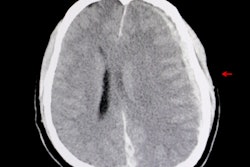
According to the results, based on pre- and postprocedural CT imaging, the median hematoma thickness in patients declined from 12 mm before embolization to 3.6 mm. A reduction equal to or more than 50% was observed in 56% of hematomas, and complete radiographic resolution occurred in 37%. One patient (3%) required surgery due to persistent symptoms after MMAE, the authors noted.
Seventeen patients (57%) died of cancer progression a median of 78 days following embolization. The median survival for all patients was 122 days. Early radiographic improvement, assessed at a median of 36 days after embolization, was associated with significantly longer survival (148 vs. 29 days, p = 0.0002), the researchers reported.
“Coil-only MMAE was associated with significant hematoma thickness reduction and a notable rate of complete radiographic resolution, despite the absence of distal embolic agents,” the group wrote.
While subdural hematomas are traditionally managed with surgery to remove the blood clots, surgery results in high recurrence rates, and this has prompted investigations into alternative treatments. Whether MMAE could serve as a definitive alternative to surgery will require further studies, the researchers noted. Also, the cohort in this study was a particularly high-risk population with advanced cancer, which limits its generalizability to patients with better performance status, they wrote.
“Larger prospective studies are needed to establish optimal patient selection and comparative effectiveness,” the team concluded.
The full study is available here.