The Open Source Imaging Consortium (OSIC), a global nonprofit consortium of academic institutions, vendors, and philanthropic organizations, has launched a $55,000 competition to spur the development of artificial intelligence (AI) algorithms for predicting pulmonary fibrosis progression.
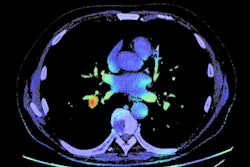
The OSIC Pulmonary Fibrosis Progression competition, which is administered by data science company Kaggle, will run through October 6. Participants will be tasked with creating machine-learning techniques to predict the severity of lung function decline in a patient with idiopathic pulmonary fibrosis based on a CT image and metadata, as well as baseline forced vital capacity.
"If successful, patients and their families would better understand their prognosis when they are first diagnosed with this incurable lung disease," the OSIC wrote. "Improved severity detection would also positively impact treatment trial design and accelerate the clinical development of novel treatments."
The challenge is being led by the OSIC's lead radiologist Dr. Simon Walsh of Imperial College London and the OSIC's lead computational scientist Dr. David Barber of the University College London.
The OSIC was formed to facilitate advances in the fight against fibrosing interstitial lung and other idiopathic pulmonary fibrosis diseases, as well as other respiratory diseases such as emphysematous conditions, according to the organization. The goal is to bring together radiologists, clinicians, and computational scientists from around the world to develop digital imaging biomarkers to provide imaging-based diagnosis, prognosis, and prediction of therapy response, the OSIC said.
OSIC members include Siemens Healthineers, National Jewish Health in Denver, CO; Boehringer-Ingelheim, CSL Behring, the Université de Lyon in Lyon, France; Fondazione Policlinico Universitario Agostino Gemelli in Rome, Italy; the National and Kapodistrian University of Athens in Athens, Greece; and patient support group PF Warriors.