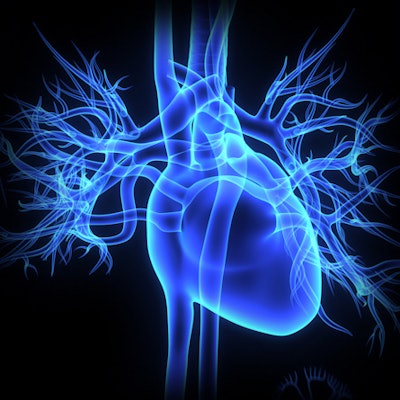
A new expert consensus document reviews the available evidence on coronary CT angiography (CCTA) of atherosclerotic plaque.
The document is a collaborative effort from the Society of Cardiovascular Computed Tomography (SCCT) and the North American Society of Cardiovascular Imaging (NASCI). The expert guidance was jointly published in both the Journal of Cardiovascular Computed Tomography and the International Journal of Cardiovascular Imaging.
The new document reviews the evidence and provides a consensus summary and recommendations regarding CCTA imaging of atherosclerotic plaque. It also standardizes the definitions for high-risk plaque features and provides practice points related to risk stratification.
In addition, the document highlights evidence gaps in plaque imaging and future research needs. It also provides minimum data elements for structured reporting.







![Images show the pectoralis muscles of a healthy male individual who never smoked (age, 66 years; height, 178 cm; body mass index [BMI, calculated as weight in kilograms divided by height in meters squared], 28.4; number of cigarette pack-years, 0; forced expiratory volume in 1 second [FEV1], 97.6% predicted; FEV1: forced vital capacity [FVC] ratio, 0.71; pectoralis muscle area [PMA], 59.4 cm2; pectoralis muscle volume [PMV], 764 cm3) and a male individual with a smoking history and chronic obstructive pulmonary disorder (COPD) (age, 66 years; height, 178 cm; BMI, 27.5; number of cigarette pack-years, 43.2, FEV1, 48% predicted; FEV1:FVC, 0.56; PMA, 35 cm2; PMV, 480.8 cm3) from the Canadian Cohort Obstructive Lung Disease (i.e., CanCOLD) study. The CT image is shown in the axial plane. The PMV is automatically extracted using the developed deep learning model and overlayed onto the lungs for visual clarity.](https://img.auntminnie.com/mindful/smg/workspaces/default/uploads/2026/03/genkin.25LqljVF0y.jpg?auto=format%2Ccompress&crop=focalpoint&fit=crop&h=112&q=70&w=112)


