
Mars Bioimaging has tapped CT engineer Robert Senzig as its new vice president (VP) of clinical engineering.
Senzig comes to Mars Bioimaging from GE Healthcare, where he served as CT system engineering manager from 1982 until his retirement in 2018. He helped develop the first solid state detector CT, slipring CT, and multislice CT, as well as kV switching for dual-energy CT, Mars Bioimaging said. Senzig holds 50 patents.
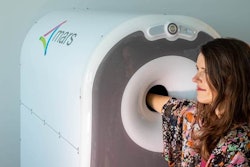
Mars Bioimaging developed the first commercial preclinical spectral photon-counting CT scanner and a specialist compact point-of-care wrist and hand scanner, according to the firm. It aims to secure U.S. Food and Drug Administration clearance for the wrist scanner by mid-2022.







![Images show the pectoralis muscles of a healthy male individual who never smoked (age, 66 years; height, 178 cm; body mass index [BMI, calculated as weight in kilograms divided by height in meters squared], 28.4; number of cigarette pack-years, 0; forced expiratory volume in 1 second [FEV1], 97.6% predicted; FEV1: forced vital capacity [FVC] ratio, 0.71; pectoralis muscle area [PMA], 59.4 cm2; pectoralis muscle volume [PMV], 764 cm3) and a male individual with a smoking history and chronic obstructive pulmonary disorder (COPD) (age, 66 years; height, 178 cm; BMI, 27.5; number of cigarette pack-years, 43.2, FEV1, 48% predicted; FEV1:FVC, 0.56; PMA, 35 cm2; PMV, 480.8 cm3) from the Canadian Cohort Obstructive Lung Disease (i.e., CanCOLD) study. The CT image is shown in the axial plane. The PMV is automatically extracted using the developed deep learning model and overlayed onto the lungs for visual clarity.](https://img.auntminnie.com/mindful/smg/workspaces/default/uploads/2026/03/genkin.25LqljVF0y.jpg?auto=format%2Ccompress&crop=focalpoint&fit=crop&h=112&q=70&w=112)


