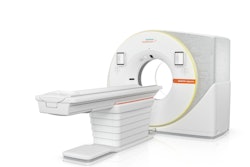
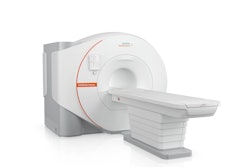
The U.S. Food and Drug Administration (FDA) has cleared Siemens Healthineers' Biograph Trinion PET/CT scanner.
The device features an air-cooled digital detector based on lutetium oxyorthosilicate (LSO) crystal elements which delivers high spatial resolution; a time-of-flight performance of 239 picoseconds for small lesion detectability; and sensitivity up to 128 cps/kBq, according to the firm. Biograph Trinion's platform allows for PET, CT, and postprocessing workflows on one system without the need for a separate CT exam or postprocessing, and postprocessing imaging applications include oncology, theranostics, cardiovascular imaging, and neurology imaging, Siemens said.




![Images show the pectoralis muscles of a healthy male individual who never smoked (age, 66 years; height, 178 cm; body mass index [BMI, calculated as weight in kilograms divided by height in meters squared], 28.4; number of cigarette pack-years, 0; forced expiratory volume in 1 second [FEV1], 97.6% predicted; FEV1: forced vital capacity [FVC] ratio, 0.71; pectoralis muscle area [PMA], 59.4 cm2; pectoralis muscle volume [PMV], 764 cm3) and a male individual with a smoking history and chronic obstructive pulmonary disorder (COPD) (age, 66 years; height, 178 cm; BMI, 27.5; number of cigarette pack-years, 43.2, FEV1, 48% predicted; FEV1:FVC, 0.56; PMA, 35 cm2; PMV, 480.8 cm3) from the Canadian Cohort Obstructive Lung Disease (i.e., CanCOLD) study. The CT image is shown in the axial plane. The PMV is automatically extracted using the developed deep learning model and overlayed onto the lungs for visual clarity.](https://img.auntminnie.com/mindful/smg/workspaces/default/uploads/2026/03/genkin.25LqljVF0y.jpg?auto=format%2Ccompress&crop=focalpoint&fit=crop&h=112&q=70&w=112)


