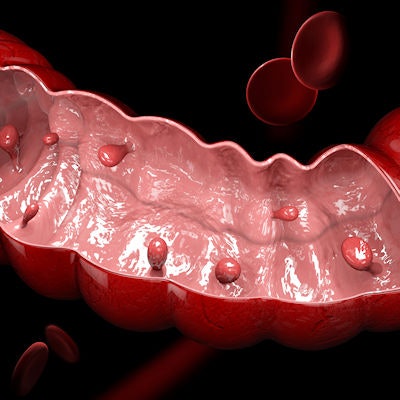
The U.S. Food and Drug Administration (FDA) has granted investigational device exemption for Check-Cap's C-Scan, permitting the company to study the polyp screening test in the U.S.
C-Scan aims to detect colorectal polyps before they turn into cancer. It is intended for screening of individuals who are at average risk for colorectal cancer and are poor candidates for colonoscopy or decline colonoscopy, or who had incomplete optical colonoscopies.
The study will evaluate the safety and performance of C-Scan, as well as patient compliance with the test. C-Scan is based on an ultralow-dose x-ray capsule and control and recording system that generates a 3D map of the inner lining of the colon as it travels through the gastrointestinal tract.







![Representative example of a 16-year-old male patient with underlying X-linked adrenoleukodystrophy. (A, B) Paired anteroposterior (AP) chest radiograph and dual-energy x-ray absorptiometry (DXA) report shows lumbar spine (L1 through L4) areal bone mineral density (BMD). The DXA report was reformatted for anonymization and improved readability. The patient had low BMD (Z score ≤ −2.0). (C) Model (chest radiography [CXR]–BMD) output shows the predicted raw BMD and Z score in comparison with the DXA reference standard, together with interpretability analyses using Shapley additive explanations (SHAP) and gradient-weighted class activation maps. The patient was classified as having low BMD, consistent with the reference standard. AM = age-matched, DEXA = dual-energy x-ray absorptiometry, RM2 = room 2, SNUH = Seoul National University Hospital, YA = young adult.](https://img.auntminnie.com/mindful/smg/workspaces/default/uploads/2026/04/ai-children-bone-density.0snnf2EJjr.jpg?auto=format%2Ccompress&dpr=2&fit=crop&h=167&q=70&w=250)


