Minimally invasive microwave ablation has benefits over repeat surgery in patients with recurrent intrahepatic cholangiocarcinoma (iCCA), according to a study published January 13 in Radiology.
The finding is from a secondary analysis of a previous long-term prospective study in China that compared ablation and surgery as primary treatments in patients with the disease, noted first author Chuan Pang, PhD, of the Fifth Medical Center of Chinese PLA General Hospital in Beijing, and colleagues.
“Compared with repeat liver resection, microwave ablation resulted in similar overall survival and disease-free survival, as well as better perioperative characteristics, for participants with recurrent intrahepatic cholangiocarcinoma,” the group wrote.
iCCA is a rare and aggressive cancer of the bile ducts inside the liver with a five-year recurrence rate of up to 70% after primary surgical treatment. In a previous study involving 10,441 participants that was conducted between January 2009 and June 2024, researchers found that overall survival and disease-free survival were comparable between ablation and surgery as first-line treatment for the condition.
In this study, Pang and colleagues compared outcomes among 494 patients from the previous trial who underwent either ablation or liver resection for recurrent iCCA.
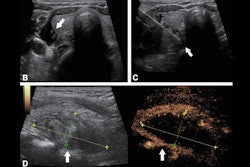
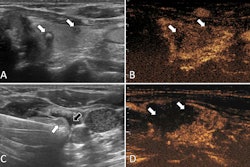
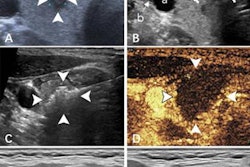
All ablation procedures were performed percutaneously with ultrasound- or CT-guided imaging. After ablation or surgery, participants underwent regular follow-ups every three to six months for the first two years and then annually until a follow-up end date of June 2024. The primary outcome was overall survival, calculated from the date of ablation and/or surgery for the recurrent tumor to death from any cause or last follow-up.
According to the results, participants who underwent ablation had a median overall survival of 29.8 months compared with an overall survival of 34 months for patients who underwent surgery. For patients who had the more aggressive large duct subtype of the disease, surgery resulted in improved disease-free survival compared with ablation, yet ablation patients had shorter hospital stays (median, 9 days vs. 14 days; p < 0.001) and fewer complications (31.3% vs. 5.5%; p < 0.001), the researchers reported.
“[Microwave ablation] may be considered as a competent alternative to surgery for recurrent iCCA,” the group wrote.
The study findings support the recommendation from the National Comprehensive Cancer Network (NCCN) for ablation in recurrent disease, particularly in patients of Asian-Pacific descent, where iCCA incidence is highest, the researchers noted. Nonetheless, due to the observational nature of the study, the results should be interpreted as exploratory, they wrote.
“More strictly designed studies are needed,” the group concluded.
In an accompanying editorial, Christos Georgiades, MD, PhD, of Johns Hopkins University in Baltimore, MD, wrote that the study represents a building block toward improving outcomes for patients with a disease that has until recently “flown under the radar” in the oncology community.
“iCCA is a cancer of emerging focus, having been previously relegated to secondary interest due to its relative rarity and limited utility of available treatments,” Georgiades explained.
Further, he noted that the demonstrated superiority or noninferiority of one treatment option should not be an exclusionary concept, especially in the case of iCCA, as aggressive, multimodality treatments seem to work synergistically and further improve outcomes for these patients.
“Although the timing or prioritization of these various treatment options has not been defined, a multidisciplinary tumor board can address this issue and ensure optimal outcomes in these patients,” Georgiades concluded.
The full study is available here.