A group of experts has issued new appropriate use criteria for F-18 floretyrosine (FET) PET imaging of glioma.
Published November 12 in the Journal of Nuclear Medicine, the criteria were developed by a 16-member multidisciplinary workgroup convened by the Society of Nuclear Medicine and Molecular Imaging (SNMMI) and follows the U.S. Food and Drug Administration's (FDA) approval of F-18 floretyrosine (Pixclara, Telix) in September.
"The recent FDA approval of F-18 floretyrosine (FET) PET for glioma imaging gives patients with brain tumors and clinicians in the United States routine access to amino acid PET," noted lead author Derek Johnson, MD, of the Mayo Clinic in Rochester, MN.
The workgroup applied the RAND/UCLA Appropriateness Method and conducted a systematic literature review before defining eight clinical scenarios reflecting common encounters in patients with primary brain tumors. Members representing SNMMI, the American Society of Neuroradiology, and the Society for Neuro-Oncology independently scored each scenario on a 1 to 9 scale, with 1 to 3 indicating “rarely appropriate,” 4 to 6 “may be appropriate,” and 7 to 9 “appropriate.”
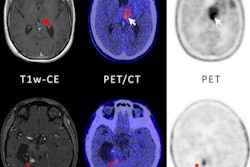
The workgroup rated FET-PET as “appropriate” in two scenarios: biopsy planning in patients with suspected glioma (score 7) and differentiation of viable tumor from treatment-related changes in adult-type diffuse glioma (score 8). Six scenarios received “may be appropriate” ratings: evaluation of indeterminate brain lesions, resection planning, radiation planning, distinguishing viable tumor from treatment-related changes in non–adult-type primary CNS neoplasms, therapy response assessment, and longitudinal disease monitoring. No scenario was rated “rarely appropriate.”
"The most extensively investigated indication for FET-PET is its use in distinguishing viable tumor, whether progressive or residual, from treatment-related changes in patients previously treated with radiation," the group wrote.
The projected increased use of FET-PET will likely lead to higher quality and volume of data to better define clinical scenarios where these scans provide value, the group concluded.
The full article is available here.