
The National Institutes of Health (NIH) has awarded $12.6 million to advance AI4AD2, the second phase of Artificial Intelligence for Alzheimer's Disease (AI4AD), bringing total NIH investment in the initiative to $30.7 million.
The project is led by Paul M. Thompson, PhD, associate director of the Mark and Mary Stevens Neuroimaging and Informatics Institute at the Keck School of Medicine, part of the University of Southern California.
AI4AD2 unites 10 investigators and 23 co-investigators from 10 institutions and will analyze large-scale datasets including whole-genome sequencing, brain imaging, cognitive testing, and other biological data to advance diagnosis and treatment of dementia.
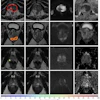
The initiative builds on the original AI4AD project, launched in 2020, which developed AI tools that identified Alzheimer's-related features on brain scans with more than 90% accuracy by training on 80,000 brain scans.
AI4AD2 will pursue four research goals:
- Identifying meaningful subtypes of Alzheimer's disease and related dementias using AI to categorize patients based on brain scans, cognition, neuropathology, and genetic data.
- Developing genomic language models to analyze DNA sequences across data from more than 58,000 participants in 57 cohorts.
- Adapting disease classification tools for global and multi-ancestry populations including African, Indian, Korean, and U.S. cohorts.
- Identifying subtype-specific drug targets using PreSiBO, an AI-based drug discovery tool developed during the original AI4AD effort.


.fFmgij6Hin.png?auto=compress%2Cformat&fit=crop&h=100&q=70&w=100)



.fFmgij6Hin.png?auto=compress%2Cformat&fit=crop&h=167&q=70&w=250)


