Scalable versions of MRI can be applied to imaging the complex development of infant and children’s brains, even when resources are few and far between, according to a presentation given May 10 at the International Society for Magnetic Resonance in Medicine (ISMRM) annual meeting.
Kirsten Donald, MBChB, PhD, of the University of Cape Town shared insights on pediatric MRI in Africa for the Lauterbur Lecture, part of the opening ceremony at ISMRM. These included recent studies showing how MRI can be workable in measuring children’s brain health over time in low-resource settings.
“MRI for research and clinical applications without sedation is feasible, even in infants and toddlers in Africa,” Donald said. “Scalable versions of MRI … show huge potential.”
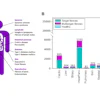
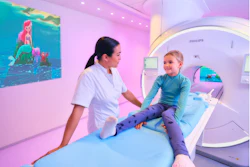
Imaging datasets for children in Africa, including those in South Africa, face gaps in geography, age window, and integration. MRI in particular can be harder to access for patients than in other countries around the world, Donald said. Imaging infants and toddlers can be challenging for neuroimaging specialists since they need to be asleep during exams to gather standard-quality images.
However, Donald added that there is hope toward better understanding children’s brain development through neuroimaging. She cited the success of scalable electroencephalography (EEG) systems for rapid, easier brain measurements during the first year of life. These systems show how delayed maturation of visual evoked potentials (VEPs) correlates with less myelination at the same age.
Furthermore, EEG signals are sensitive to early neurodevelopmental differences before symptoms become present, making way for growth charts to predict early developmental outcomes.
What recent research suggests
Back to imaging, Donald shared MR studies investigating a couple of case scenarios, including children born to mothers with HIV and children born to mothers with anemia. These studies, some of which Donald was a part of, used datasets from the Drakenstein Child Health birth cohort study and the Khula Leap study, both based in South Africa.
“Population cohorts provide us with a unique opportunity to investigate brain health longitudinally, and there’s more to come,” Donald said.
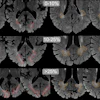
One study using the Drakenstein dataset explored links between HIV exposure in children born to mothers with the virus (the children being unaffected). Researchers found an association between HIV exposure and cortical thickness across the prefrontal cortex, with cortical thickness in the medial orbitofrontal cortex showing the relationship between HIV exposure and language impairment in children.
Another study using the Drakenstein dataset found that children with perinatal HIV exposure showed smaller longitudinal subcortical brain volumes compared to children not exposed to HIV. A third study Donald cited that used the same dataset showed how MR spectroscopy (MRS) reveals associations between HIV exposure in children and learning outcomes at ages six to seven.
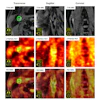
For anemia, Donald cited studies showing that anemia in pregnancy is tied to altered child brain structural development and that ultra-low-field MRI (64 mT) reveals how maternal anemia in pregnancy affects child brain structure as early as infancy.
The need to collaborate and educate
Donald said that public engagement is needed to educate mothers in rural areas about MRI scans for their young children. As an example, she cited work from the Kenya-based African Population & Health Research Centre, which produced an animated educational video on neuroimaging for babies.
Donald also noted work being done by the African Leadership in Measuring brain health for children and Adolescents (ALMA) and the Developing Excellence in Leadership, Training, and Science in Africa (DELTAS Africa II) initiative.
She called for interdisciplinary collaboration between radiologists, pediatricians, policymakers, and researchers from other specialties to advance health in Africa.
“We have work ahead of us. We will be most successful if we’re able to maximize our interdisciplinary collaborations, and that is what this society [ISMRM] embodies,” Donald said. “I’m excited to start.”
Check out AuntMinnie's full coverage of ISMRM 2026 on our ShowCast.