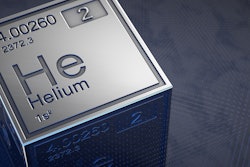
Radiologists, their institutions, and the professional societies which represent them must take proactive measures to ensure long-term helium supply security, according to an editorial published April 22 in the Journal of the American College of Radiology.
The fresh mandate arises in the context of recent helium supply disruptions caused by global unrest, wrote a team led by Vrushab Gowda, MD, JD, of Massachusetts General Hospital and Harvard Medical School in Boston.
"In the past month alone, war, trade disruption, and competing industrial demand have pushed [helium's] supply to the brink, threatening its availability and forcing a reevaluation of resource allocation in imaging," the group noted.
Modern medicine would be inconceivable without MRI, Gowda and colleagues explained, writing that "advanced sequences, MR-guided intervention, emerging PET/MR technologies, and functional imaging techniques simultaneously form a fixture of today's practice while advancing its horizon … [and] the critical role of helium in supporting this technology cannot be understated." In fact, MRI drives 30% of global commercial demand for helium, according to the authors.
They highlighted recent events that have jeopardized the global helium supply, including the Strait of Hormuz crisis and attacks on the Ras Laffan Industrial City in Qatar, which is the "primary processing facility of the largest natural gas field in the world." The group explained that helium is a "byproduct of far more abundant (and lucrative) natural gas extraction," which "lends the global helium market a unique inelasticity."
Gowda and colleagues urged imaging professionals and their societies to take the following actions to protect the supply of helium:
- Advocate for helium's relisting as a critical resource under the Strategic and Critical Materials Stock Piling Act.
- Support development of emerging technologies and practices, such as fusion power generation, next-generation reactors that use deuterium–tritium fuel, which produces helium as a byproduct, and ultralow-helium (up to 10L) sealed MRI units.
- Encourage careful helium stewardship at the systems level, use helium reclamation units, and practice local reliquefaction to recover helium runoff from research and clinical use.
Helium is a "finite commodity for which no viable substitute exists," the authors concluded.
Access the commentary here.