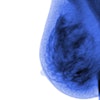
The American College of Radiology (ACR) in December released the latest version of BI-RADS, the guide that radiologists use for standardized breast imaging terminology and reporting.
The BI-RADS Manual (formerly “Atlas”) includes updates across five sections of breast imaging. These include mammography, ultrasound, MRI, contrast-enhanced mammography (CEM), and auditing and outcomes monitoring.
The latest version of BI-RADS (BI-RADS v2025) also contains revisions from the earlier version based on member feedback, more clinical images, and updates about the latest technology in imaging equipment.
“It helps us all speak the same language,” said Mary Newell, MD, chair of the ACR Committee on BI-RADS. “In the end, the most important part of it is that it benefits patients. When we’re all talking the same language … the best thing is that our patients benefit from it.”
This version replaces the previous version of BI-RADS that was published in 2013. The committee reviewed available research and expert comments to create evidence-based material for BI-RADS. Newell said this reflects changes in breast imaging over the past decade.
“As in all parts of life, things have advanced,” she said. “We felt it was time for an update -- new images, new concepts -- so we got to work on it.”
Mary Newell, MD, highlights some of the changes made to BI-RADS with the latest version released by the ACR.
The ACR highlighted that BI-RADS reporting allows radiologists to communicate results to the referring physician with final assessment and specific management recommendations. It also provides mechanisms for peer review and quality assurance data to improve patient care quality.
Along with over 900 clinical images (including synthetic images) and updated breast composition descriptors, BI-RADS v2025 contains new descriptors for elasticity assessment on breast ultrasound and MR imaging for breast implants. Nonmass lesions on ultrasound and digital breast tomosynthesis (DBT) are also covered in the latest version.
Dana Smetherman, MD, CEO of the ACR, said this is a result of “years of hard work” and will benefit the breast imaging community.
“A lot has changed. We have several new modalities that were not really in common use,” she said. “We wanted to make sure that when this got out into practice, that it would really be useful and reflect how breast radiology is being practiced today.”
Dana Smetherman, MD, describes what breast radiologists have to look forward to when using the ACR's latest version of BI-RADS.
BI-RADS v2025 is available in both hard and electronic copies. Stamatia Destounis, MD, a coauthor on BI-RADS version 2025, said having this available electronically allows for easier editing for later updates.
“If edits have to be made, it will be much more seamless and will hopefully be out more quickly,” she said. “I think it will be easier to look for things for someone in training or someone who wants to refresh themselves on a section.”
The latest version of BI-RADS can be found on the ACR’s website.