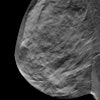
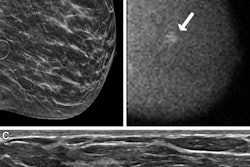
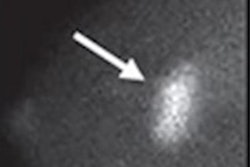
Despite its performance and accessibility, molecular breast imaging (MBI) continues to be underused, according to research published January 16 in Clinical Imaging.
A team led by medical student Ria Dave from the Washington University School of Medicine in St. Louis, MO, found that MBI use was stable from 2017 to 2021 but declined in 2022.
“Challenges such as concern over whole body radiation exposure and limited availability contribute to overall low utilization of MBI in the U.S.,” the Dave team wrote.
MRI continues to be the recommended modality for supplemental imaging of dense breasts. Despite its accuracy, MRI’s use is limited by higher costs, limited accessibility, and contraindications that may prevent women from undergoing these exams.
MBI is a recognized alternative to MRI, with prior research showing that MBI achieves similar sensitivity and specificity compared to MRI. MBI may also be used for initial disease staging. However, the researchers pointed out the limited usage of this technique. According to the Society of Nuclear Medicine and Molecular Imaging (SNMMI), MBI is available in 32 centers within 19 states. These consist mostly of academic and high-volume breast centers.
Dave and colleagues studied trends in MBI use among privately insured women in the U.S. from 2017 to 2022. They included data collected from the Merative MarketScan Commercial Database between 2017 and 2022 for women ages 25 to 64.
Final analysis included 3,024 study-eligible women who underwent 3,648 MBI exams. The median duration of enrollment of the total eligible study population was 21 months (range, 3 to 72 months), and the average was 27.4 months.
From 2017 to 2022, breast MBI use decreased by 31%, from 7.9 to 5.6 per 1,000 person-years of observation (PYO, p < 0.0001). While this trend remained stable from 2017 to 2021, MBI’s use decreased in 2022 from 8.3 PYO to 5.6 PYO, a 33% reduction.
When subdivided by age group, all ages showed decreased MBI use over the study period. The youngest age groups (ages 25 to 29 and 30 to 34 ) declined to zero utilization by 2022. Women aged 45 to 49 years, meanwhile, had the highest use rate at 15.1 per 1,000 PYO in 2019 (p < 0.0001). And the 60 to 64 age group had the overall highest MBI use at 12.3 per 1,000 PYO over the study period.
Of the women who underwent MBI with sufficient follow-up, 83% underwent only one exam during the study period.
Finally, MBI use varied by geographic location during the period. It rose by 89% in the western U.S and by 5% in the southern U.S. However, MBI use decreased by 66% in the northeastern U.S. and by 43% in the north-central region.
The study authors outlined several barriers to MBI’s use. These include concerns over whole-body radiation dose, lack of physical availability, longer acquisition times, and the established availability and diagnostic performances of competing supplemental imaging modalities such as MRI and contrast-enhanced mammography.
“MBI is an accurate, affordable, and safe option for patients unable to undergo supplemental screening with MRI,” the authors wrote. “With the recent advances of MBI-guided biopsy capability and radiation dose reductions, MBI is an alternative screening method that can be used for supplemental screening.”
Read the full study here.