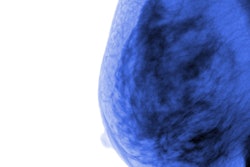
A significant number of women eventually diagnosed with lung cancer (LC) undergo mammography but are not screened for lung cancer at the time, researchers have reported.
The finding highlights an opportunity for earlier LC detection, according to a team led by Ali Ajrouch, MD, of Indiana University School of Medicine in Indianapolis. The study results were published on January 20 in Cancer Medicine.
"Many underserved groups who underutilize LCS commonly engage in mammography, suggesting an opportunity to leverage existing health-seeking behavior and mammography programs' reach to improve LC early detection and reduce disparities," the investigators wrote.
Lung cancer is the most common cancer killer in women, but LCS uptake continues to be substantially lower than breast cancer screening, despite the fact that in 2021 the U.S. Preventive Services Task Force (USPSTF) expanded eligibility by lowering the screening starting age to 50 years old and adjusting smoking history from 30 pack years to 20 pack years.
"Only 18% of eligible women undergo lung cancer screening (LCS) with low-dose computed tomography (CT), compared to 76% for mammography," Ajrouch and colleagues noted. "This disparity is starkest in underserved populations such as racial and gender minorities [that] experience greater LC mortality due to higher LC incidence from disproportionate exposure to cigarette smoke and environmental pollutants and greater barriers to LCS such as limited awareness of LCS, smoking-related stigma, healthcare system mistrust, and a lack of physician recommendation."
This screening disparity is why "leveraging the reach of mammography programs may improve LCS uptake," the authors explained, although they wrote that the potential gain in lung cancer detection using this combined screening approach remains unclear.
To address the knowledge gap, Ajrouch and colleagues assessed the proportion of women with LC eligible for both screenings, potential LC detection via integrated screening, and factors influencing each screening uptake. Their study included 345 women newly diagnosed with LC between 2019 and 2020. (The team determined the women's prediagnosis LCS-eligibility using 2013 and 2021 USPSTF criteria, LCS-uptake per 2013 USPSTF criteria, and mammography screening eligibility using 2016 USPSTF criteria.)
Among the 345 women in the study, 73.3% were eligible for mammography throughout the study time frame. Of these women, 43.5% were eligible for LCS in 2013 and 49.3% in 2021.
The group reported the following:
- Mammography uptake substantially exceeded LCS uptake, at 41.5% compared with 13.9%.
- Overall, 45.2% of study participants were eligible for both screenings, and these women represented 92.4% of all LCS-eligible cases in 2021.
- Only 20.3% of the women who were LCS-eligible in 2021 also underwent mammography.
The group also found that among women eligible for both screenings, living in more rural environments correlated with lower LCS uptake (odds ratio [OR], 0.42; p = 0.031), while undergoing mammography correlated with higher LCS uptake (OR, 2.67; p = 0.013).
The research results "provide key implementation benchmarks for integrating mammography and LCS," suggesting that "even modest success in bridging these screening modalities could substantially reduce LC mortality among women," according to Ajrouch and colleagues.
"Prospective implementation studies are warranted to validate these findings and evaluate multimodal approaches tailored to different practice settings," they concluded. "Potential strategies include online tools or telemedicine consultations for LCS eligibility assessment, integrating mobile LCS units into established mammography programs and mobile units, or partnerships between rural primary care and obstetrics and gynecology professionals and urban LCS centers."
Access the full article here.