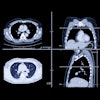
CHICAGO -- Long-term air pollution exposure is associated with more advanced obstructive coronary artery disease (CAD) identified on CT -- particularly in men, according to research presented December 4 at the RSNA meeting.
"Even at low exposure levels, air pollution is associated with more plaque in the coronary arteries," said lead author Felipe Castillo Aravena, MD, of the University of Toronto in Canada, in an RSNA statement. "Overall [we found that] higher long-term exposure to air pollution was associated with more coronary artery disease on cardiac CT in both women and men. In women, long-term exposure to fine particulate matter was linked to higher calcium scores and more severe narrowing of the arteries. In men, higher long-term exposure to fine particulate matter was associated with higher calcium scores and higher plaque burden."
Research from the Global Burden of Disease data has found that "air pollution is a pressing global health issue, contributing to an estimated 2.46 million cardiovascular deaths in 2021," the investigators noted. They conducted a retrospective study that used cardiac CT to assess the relationship between long-term exposures to two common pollutants found in urban air: Fine particulate matter of 2.5 micrometers (PM2.5) and nitrogen dioxide (NO2). (PM2.5 can include vehicle exhaust, industrial emissions, and wildfire smoke, while NO2 is a gas produced mainly by burning fossil fuels in vehicles and power plants.)
The study included 11,128 adults who underwent cardiac CT with calcium scoring between 2012 and 2023. The group categorized luminal stenosis using CAD-RADS 2.0 stenosis categories and defined obstructive CAD as more than 50% diameter stenosis. It extracted mean daily fine PM2.5 and NO2 air pollution concentrations in the 10-year period prior to patients' first cardiac CT via measurements from the nearest monitoring station to each participant's home.
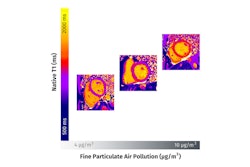
Aravena and colleagues reported that for each increase in long-term PM2.5 of one microgram per cubic meter (μg/m3), there was an 11% increase in calcium build-up in the coronary arteries, 13% greater odds of more plaque, and 23% greater odds of obstructive disease. They also reported similar trends for exposure to nitrogen dioxide, though with smaller effect sizes for every one part per billion increase.
 RSNA
RSNA
The study results underscore the need for ongoing efforts to improve air quality to protect heart health, said senior author Kate Hanneman, MD, also of the University of Toronto, in the statement.
"Heart disease is the number one cause of death globally," she said. "The results of this study add to the growing body of evidence that air pollution is a modifiable cardiovascular risk factor and reinforce the need for further research to understand why these associations differ between men and women."