CHICAGO -- Treatment of musculoskeletal pain can be effectively guided by F-18 FDG-PET/MRI, according to research presented December 4 at RSNA.
In a scientific session on spine imaging, Edwin Oei, MD, PhD, of Erasmus Medical Center in Rotterdam, the Netherlands, presented a study in which patients who underwent PET/MRI-guided treatment for pain of unknown origin achieved up to a 71% success rate in terms of relief.
“F-18 FDG-PET/MRI can reveal previously unidentified pain generators in patients with chronic [lower back pain] or persistent pain after [total hip replacement],” Oei noted.
Chronic musculoskeletal pain is a widespread health problem with a serious impact on quality of life. The majority of patients with chronic pain do not receive proper diagnosis and treatment and hence do not achieve adequate pain relief, partly due to an inability to accurately identify pain generators with conventional anatomical imaging, Oei explained.
Alternatively, hybrid F-18 FDG-PET/MRI is a modality that can visualize both structural and metabolic abnormalities, and could be potentially more accurate in identifying musculoskeletal pain generators.
In this study, to provide evidence of the value of PET/MRI in these cases, Oei and colleagues recruited 33 patients among two patient groups often presenting with musculoskeletal pain of unknown origin: chronic low back pain or persistent pain after total hip replacement.
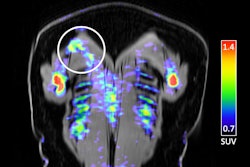
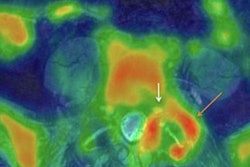
Potential pain generators were identified by increased F-18 FDG radiotracer uptake on PET and/or structural abnormalities on MRI, with findings discussed with the referring physicians. PET/MRI identified potential pain generators in 27 patients (82%), which were subsequently treated in 23 patients.
Among 14 patients with chronic low back pain who underwent PET/MRI-guided treatment (targeted injection or surgery), positive outcomes were achieved in 10 (success rate of 71%). Comparatively, in a control group, 13 patients underwent treatment based on clinical symptoms or other imaging, with positive outcomes in six (success rate of 46%). While the number of patients that reported pain relief was similar in both groups (50% vs. 52%), 45% of the control group participants had increased their pain medication or used transcutaneous electrical nerve stimulation compared with 33% in the PET/MRI group, Oei reported.
In nine patients with pain after total hip replacement, PET/MRI-guided treatment was successful in terms of pain relief in six (67%). In the control group, five participants underwent targeted treatment, and two patients reported pain relief (40%).
“PET/MRI-guided targeted treatment is more successful than treatment based on other imaging modalities or clinical symptoms only,” Oei stated.
Ultimately, the study was limited by the small number of patients, but it supports the use of PET/MRI as a useful tool for detecting unknown pain generators in these patient groups. Additional studies are warranted, Oei concluded.
To see full coverage of RSNA 2025, visit our RADCast.