Dear AuntMinnie member,
In an article we're featuring this week in our Digital X-Ray content area, researchers describe how AI natural language processing models based on Google’s BERT appear poised to play a pivotal role in radiology, with 14 out of 30 studies included in a recent review published in 2022 alone, according to the authors.
In other news, an international group of experts recently penned an editorial that proposes a shift in perspective on AI, from one that pits radiologists and chest x-ray algorithms against each other based on performance to one that embraces a vision of human-AI symbiosis.
Meanwhile, standalone AI algorithms are being cleared for use at breakneck speed, and what’s needed now is a reliable method to standardize testing of these algorithms, according to a group in Europe. To that end, the team recently launched an initiative called Project AIR that enables them to perform head-to-head evaluations of cleared radiology products.
But AI hasn’t completely dominated our coverage. Here are a few stories we posted on other areas in the field, with dual-energy x-ray absorptiometry (DEXA) grabbing several headlines:
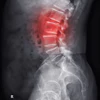
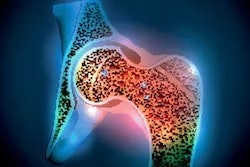
- Women taking lithium for bipolar disorder had greater bone mineral density compared to women with bipolar disorder not taking the medication, according to a recent study.
- A team of researchers at Boston Children’s Hospital has developed an age-specific dose catalog for estimating radiation exposure to children from fluoroscopy procedures.
- In a study in JAMA Network Open, researchers found that women with high body fat undergoing early breast cancer treatment may be at higher risk for vertebral fractures, despite the use of bone health drugs.
- DEXA imaging showed that implementing a clinical bone health protocol may reduce fractures in lung transplant recipients, according to researchers at the University of North Carolina.
In addition, we posted a story on a first-in-human trial of genicular artery embolization (GAE) using an ethiodized oil-based emulsion for the temporary treatment of knee osteoarthritis, with findings suggesting the procedure can improve pain and knee function.
Speaking of interventional radiology procedures, we noted that a group in Japan has developed and tested an elastic x-ray shield – and the researchers suggest the new shielding material could provide more comfortable radiation protection
Finally, we touched on the war in Ukraine, where more than 18,500 civilians have been injured since November 2023, noted portable x-ray developer MinXray. The company recently sent 70 systems to the country to help provide access to radiography amid the ongoing conflict.
That's all for now. Be sure to check our Digital X-Ray content area often for more news.