

Liver stiffness measurements obtained using conventional and updated Quantitative Imaging Biomarkers Alliance (QIBA)-compliant MR elastography (MRE) protocols demonstrated excellent agreement, according to a study published April 3 in Abdominal Radiology.
Researchers at Toranomon Hospital in Tokyo say findings support use of the QIBA-2023 updated protocol for longitudinal liver stiffness assessment without compromising diagnostic performance, according to first author Takuyo Kozuka, MD, PhD, and colleagues.
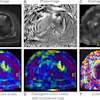
The group retrospectively evaluated the clinical utility of MRE acquisition parameters defined in the QBIC-2023 profile, comparing liver stiffness measurements among 130 identical patients who underwent liver MRE in 2024 and were examined using the old and new protocol during a single imaging session.
Kozuka and colleagues found that although the difference between the 2020 and 2023 protocols reached statistical significance, the absolute difference was not clinically meaningful.
Mean liver stiffness values were 3.62 kPa for the conventional protocol and 3.69 kPa for the updated protocol, with a very strong correlation coefficient of 0.98 and an intraclass correlation coefficient of 0.988, the group reported. Bland-Altman analysis showed a mean bias of 0.07 kPa, within established MRE repeatability thresholds.
The updated protocol also produced larger regions of interest (ROI) and greater measurable liver parenchymal area, consistent with reduced imaging artifacts and improved image quality, according to the study. The observed level of agreement remains within the range generally considered acceptable for quantitative imaging biomarkers, the authors said.
MRE has become an essential noninvasive tool for quantitative assessment of liver stiffness and fibrosis staging, particularly in patients with steatotic liver disease, Kozuka and colleagues noted. QIBA released an updated liver MRE profile in 2023, replacing the previous 2020 version.
This study focused on quantitative equivalence. Although it had limitations, the work highlights the importance of reproducibility in MRE-based stiffness measurements after transitioning to an updated imaging protocol, according to the authors.
"The QIBA-2023-compliant MRE protocol demonstrates quantitative equivalence to the conventional QIBA-2020 protocol while offering improved artifact suppression and expanded measurable liver parenchyma," they said. "These findings support use of the updated protocol for reliable longitudinal liver stiffness assessment without compromising diagnostic performance."
Find the complete paper here.
.fFmgij6Hin.png?auto=compress%2Cformat&fit=crop&h=100&q=70&w=100)




.fFmgij6Hin.png?auto=compress%2Cformat&fit=crop&h=167&q=70&w=250)


