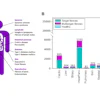
A Cochrane Library update to its 2013 prostate cancer screening review finds that even combining the standard PSA blood test with additional blood markers and an MRI scan compared to PSA testing alone may not improve outcomes.
Standard PSA screening has a well-known weakness: it catches many slow-growing cancers that would never have caused harm, pushing men toward biopsies and treatments that carry real risks of urinary, sexual, and bowel problems, noted a team led by Juan VA Franco, MD, PhD, senior editor of Cochrane Library. Some research has posited that MRI may offer a clearer picture of whether a suspicious lesion actually looks dangerous, potentially allowing more targeted decisions about who needs a biopsy at all -- but Cochrane Library is not convinced. The paper was published on May 15.
Franco's and colleagues' review included analysis of data from six trials involving nearly 790,000 men. It focused on results from a trial of 60,745 men which tested a combined strategy that added a kallikrein panel -- a broader set of blood protein markers -- to MR imaging of the prostate before any biopsy was performed.
The team noted that early results from these trials weren't straightforward. Although it reported that the research did suggest that the combined approach detected roughly 85% more prostate cancers than no screening -- including more early-stage and more advanced-stage cancers -- it cautioned that it's not yet clear whether this result would translate into fewer deaths from prostate cancer or any cause, according to the authors.
"We found insufficient evidence on the potential harms of screening, such as biopsy‐ and treatment‐related complications," they concluded. "Emerging alternatives, such as screening with a kallikrein panel and MRI, may have little to no effect on diagnoses of prostate cancer, but the results on mortality are not yet known."
Access the full review here.