An AI-based triage system for intracranial hemorrhage reduces emergency report turnaround times by 13 minutes and accelerates patient admission decisions, demonstrating that AI's clinical impact extends beyond radiology efficiency to reshape overall emergency care workflows.
- AI triage system achieved 79.3% sensitivity and 94.2% specificity for detecting intracranial hemorrhage cases
- Report turnaround time decreased from 214 minutes to 201 minutes (13-minute reduction) for ICH-positive exams
- AI-positive cases led to shorter admission times (423.5 minutes vs 523.0 minutes) compared to AI-negative cases
- Study evaluated 20,215 emergency encounters across multiple hospital sites before and after AI deployment
- Findings suggest AI triaging reshapes emergency care through patient reprioritization rather than simply accelerating existing workflows
PHILADELPHIA -- An AI-based triage approach could lower turnaround times in emergency settings, suggest findings presented October 27 at the Society for Imaging Informatics in Medicine (SIIM)-CAIMI 2026 meeting.
In her presentation, Ai Tong, PhD, from the University of Washington in Seattle shared her team’s findings showing how this approach also reduces communication latency among intracranial hemorrhage (ICH) cases flagged by AI.
“AI was associated with a slightly faster 13-minute report turnaround across our large multi-site deployment,” Tong said. “[And] disposition changed. Patients were admitted sooner and discharges took longer, which will always reflect reprioritization.”
Prior research suggests that AI can help improve workflow efficiency in emergency imaging, but data are limited on whether this translates to downstream effects.
Tong and colleagues used natural language processing (NLP)-derived labels and emergency department disposition data stratified by AI status to find out whether AI triaging leads to downstream clinical impact.
The team evaluated head CT exams performed before and after deploying its AI-based ICH triage system. It developed two NLP pipelines to extract structured clinical labels from free-text radiology reports. These included ICH-positive exams and documented clinician communication events.
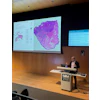
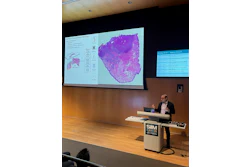
 Ai Tong, PhD, reports on her team's successful use of an AI-based ICH triaging approach in lowering turnaround times and reducing communication latency in the emergency department.
The AI triage system achieved 79.3% sensitivity, 94.2% specificity, and an F1 score of 0.78 against NLP-derived ICH labels. Among ICH-positive exams, AI triaging reduced report turnaround time from a median of 214 minutes to 201 minutes (p = 0.03).
Tong also reported comparable communication rates between pre- and post-AI implementation (33.5% vs 32.0%; p = 0.09). This included a nonsignificant trend toward reduced communication latency among AI-positive cases (p = 0.06).
Among 10,898 pre-AI and 9,317 post-AI emergency encounters, AI-positive cases led to shorter time to admission (median 423.5 minutes) than AI-negative cases (523.0 minutes; p = 0.004). AI-negative cases meanwhile led to shorter time to discharge than AI-positive cases (median 520.0 vs. 611.0 minutes; p = 0.05).
Tong said this finding is due to the reprioritization of patients. However, she added that the AI-negative cohort was underpowered.
"In a situation where literally three minutes count, this is incredibly meaningful," she said.
Finally, the team found that falls and motor vehicle accidents were the primary chief complaints throughout the study period.
“This [study] is early and only correlational, but it is where we have already seen next to the staff outcomes,” Tong said.
She added the findings suggest AI triaging’s clinical impact extends beyond radiology efficiency and could reshape emergency care rather than accelerate it.