CHICAGO -- Medical imaging can help shape priorities for the All of Us campaign to advance individualized precision medicine, according to an address given November 30 at RSNA 2025.
In his talk during the opening plenary session, Geoffrey Ginsburg, MD, PhD, from the National Institutes of Health (NIH), laid out ideas of how the All of Us Research Program and RSNA can partner “in an unprecedented fashion” to craft precision health and imaging. Ginsburg is the chief medical and scientific officer of the program.
“What if every image, every electronic health record, and every genome were used to advance individual, population, and global health?” Ginsburg said to the RSNA audience. “Bringing these together will create a powerful platform for precision medicine researchers to make the next discoveries to advance the field.”
The NIH All of Us Research Program aims to gather data from one million or more people in the U.S. to accelerate research and improve health. Since its 2018 launch, the program has recruited around 868,000 participants who have shared their health-related data. This included electronic health records, biospecimens, data from wearable technologies, and self-reported surveys.
Data for All of Us are housed in the cloud-based Researcher Workbench. This includes tools, support resources, sample data workbooks, and other features for researchers to work with. Ginsburg said that with the available data, over 16,000 researchers from around the world, representing over 1,100 institutions, have produced over 950 peer-reviewed publications.
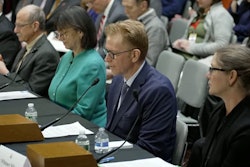
 Geoffrey Ginsburg, MD, PhD, outlines the work of the All of Us Research Program and how medical imaging can help advance the program's goals in individualized precision medicine.
Radiologists continue to explore how imaging data can predict risk for cancer and other pathologies. Ginsburg cited a 2010 study published in JAMA showing how adding coronary artery calcium measures from CT to Framingham risk factors improves prediction and risk classification for coronary heart disease.
“It’s very clear that imaging in combination with other clinical and molecular data will help with augment clinical risk identification,” Ginsburg said.
Ginsburg also touched on how AI has led to advancements in precision medicine by putting together multiple health data points, including genomics, proteomics, health records, and imaging, among others. This has led to improved diagnosis, risk prediction, disease monitoring and trajectory, and new drug discovery.
Ginsburg said the All of Us program is working on protocols to port images into its workbench. He also listed some benefits of multiorgan imaging data in the context of the program. These include allowing for quantitative phenotyping, AI-powered biomarker discovery, early disease detection, risk prediction, and exploration of the imaging-genomics interface.
Finally, Ginsburg outlined how RSNA and the All of Us program can work together:
- Leverage the researcher workbench to develop image-based hypotheses.
- Set up a workshop to establish imaging priorities and influence the national agenda for precision medicine.
- Develop and validate AI algorithms to integrate imaging phenotypes with electronic health record data, genomic data, and all other data types in the program.
- Advocate for routine deidentification and image management for ethical considerations.
- Advocate for embedding All of Us data in training curricula for residents, fellows, and early-career scientists.
“We can build a map of human health together,” Ginsburg said. “This is the future, and the RSNA are essential architects to that future.”
To view full coverage of RSNA 2025, visit our RADCast.