Medical imaging AI is transitioning from algorithm evaluation to real-world clinical implementation through multimodal models and language-based tools, with experts emphasizing that successful deployment requires multidisciplinary collaboration, regulatory clarity, reimbursement solutions, and integration with existing healthcare systems.
- Watershed moment: Medical imaging AI is shifting focus from evaluating algorithms to implementing them in actual clinical practice and real-world applications.
- Multimodal models lead: Advanced AI systems combine imaging data with text and healthcare information to improve detection of difficult findings and assist radiologist workflows.
- Language models democratize development: LLMs make AI tool creation more accessible to clinicians without specialized coding expertise, enabling faster practical implementation.
- Multidisciplinary collaboration essential: Radiologists must work with pathologists, oncologists, data scientists, and other specialists to advance AI effectiveness in patient care.
- Key barriers to deployment: Regulatory approval, reimbursement models, electronic medical record integration, and clinician trust remain critical obstacles to widespread AI adoption.
PHILADELPHIA – The next evolution of AI in medical imaging is in its formative stages at the Society for Imaging Informatics (SIIM)-CAIMI 2026 meeting. And by this time in 2027, more evidence could point to medical imaging AI’s next steps toward clinical applications.
That’s the consensus from SIIM-CAIMI’s program chairs, which include Katherine Andriole, PhD, Peter Chang, MD, and Eliot Siegel, MD. The three reflected on observations from the meeting and outlined what’s needed for this AI evolution to take place in medical imaging.
“We're sort of at a watershed moment right now as we end up making the transition to implementation rather than just looking at evaluation of AI algorithms,” Siegel said. “Now we are looking at multimodal frontier models and multimodal models and also looking at implementation in real world applications.”
Attendees at SIIM-CAIMI observed the latest data and insights through the meeting’s keynotes, scientific abstract presentations, and AI builder talks at the University of Pennsylvania’s Smilow Center for Translational Research. And while the university’s researchers over the years have contributed to treatment efforts against diseases such as rabies, rubella, rotavirus, and COVID-19, the center also served as the center for what could be a sneak peek into medical imaging AI’s future.
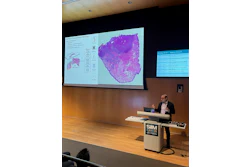
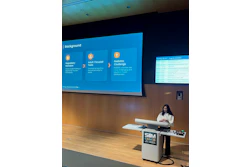
Eliot Siegel, MD, shares his optimism on how LLMs are increasingly being used for medical imaging-based tasks.
Chang said it’s encouraging to see language models be accessible as opposed to traditional vision and image-based models requiring specialized expertise.
“With language models, people just come up with an interesting, practical, accessible idea, and they're able to turn it into practice almost right away, he said.
Andriole highlighted practical tools that aim to help radiologists in their workflows, whether they’re detecting artifacts on imaging or helping with time-consuming reporting.
“Many of them are combined models, so multimodal, where they're using text information, healthcare information, as well as the imaging data to do a better job at detecting difficult findings,” she said. “And we're also, I think, seeing a number of applications that are, I would say, educational tools, helping the resident.”
Multidisciplinary collaboration necessary
For AI to progress into clinical progress and be effective in patient care, radiologists must collaborate with medical professionals in various specialties, the experts said. These include pathologists, oncologists, and data scientists, among others.
In his October 26 keynote, Faisal Mahmood, PhD, from Harvard Medical School and Brigham and Women's Hospital in Boston, presented on how the Apollo model combines data from multiple specialties to create a search engine to monitor patient health over time. Mahmood comes from a pathology background.
Chang said SIIM is a prime example of collaboration within the imaging space.
Peter Chang, MD, shares his thoughts on the need for collaboration among professionals in multiple specialties to advance AI for patient care.
Andriole said that AI is a team sport but noted that digital pathology could have a more extensive role in this space.
“We have some of it, but I think pathology is kind of where radiology was maybe 20 years ago or even 25 years ago because they're not digital, and I'm not seeing a huge impetus for them to move to digital pathology, which is unfortunate,” she said. “I mean, they like their workflow which is different than radiology, but boy would it be fantastic if we could have digital pathologies to confirm and to do knowledge discovery, combining all those different specialties.”
Andriole further highlighted her team’s work at the University of California, Los Angeles where she and colleagues have involved radiologists, pulmonologists, intensive care unit physicians, transplant surgeons, and data scientists on creating AI healthcare models.
What’s needed for medical imaging AI’s next step?
Before AI models can be regularly implemented into practice, several areas need to be addressed, the experts said.
For Andriole, this means tackling regulation, reimbursement, and trust in these tools.
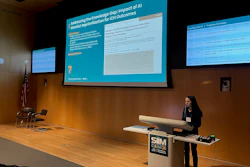
Katherine Andriole, PhD, outlines the need for regulation for emerging AI tools that are being deployed into clinical practice.
She also noted that few AI tools have reimbursement attached to them, even though “many places” are moving to these tools because they see efficiency improvements and other benefits.
Chang meanwhile said he expects to see more democratization in who is developing AI-based tools for imaging.
“CAIMI is a conference of developers and tweakers, folks that are building algorithms and getting them into the clinic, whereas most of the other conferences focus on taking those tools and deploying them,” said Chang, who hosted a coding agent demonstration at the meeting. “I think with the technology and the agentive workflow, we're really seeing a mix of those two audiences.”
He added that the ability to use agents to enable participation in tool development is needed for researchers to build dashboards and websites with relatively little coding experience.
And Siegel said he expects to continue to see a dominance of LLMs being presented, as well as more agentic AI that will be used to a greater extent. He added that more healthcare systems and imaging departments will accept deployment of LLMs to the point of become routine.
“And one of the themes of the [CAIMI] presentations has been people presenting really excellent work and projects and development that they've done and innovations that they can't get into the actual practice because it's difficult to integrate these into the electronic medical record and standard proprietary tech systems,” Siegel said.