F-18 FDG PET/MRI can successfully identify pain generators and guide treatment leading to pain relief in patients with chronic low back pain, according to a study presented May 12 at the ISMRM meeting.
The findings -- including that F-18 FDG radiotracer uptake decreased in 83% of patients after treatment -- suggest the modality may help overcome limitations of current imaging techniques, noted presenter Rianne van der Heijden, MD, PhD, of Erasmus University Medical Center in Rotterdam, the Netherlands.
“Treatment of chronic low back pain is challenging, as physical examination and conventional imaging techniques often cannot accurately identify the source of the pain,” Heijden and colleagues wrote.
Chronic low back pain is a leading cause of disability worldwide, the group noted. Hybrid F-18 FDG-PET/MRI integrates PET’s ability to detect low-grade inflammation that occurs in chronic pain with MRI’s detailed anatomical information. While the modality has shown promising results in identifying potential pain generators in prior studies, few studies have confirmed correlations between clinical outcome and changes in F-18 FDG uptake following treatment, according to the researchers.
To bridge the gap, the group recruited 12 patients (eight women) between the ages of 18 and 75 years old with diagnostically challenging chronic low back pain. Subjects underwent whole-body scans on a 3-tesla PET/MRI system (Signa PET/MR, GE HealthCare) including eight to 10 bed positions. Increased FDG uptake was defined as SUVmax greater than 1.0 and compared with contralateral structures and adjacent spinal levels.
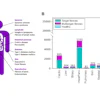
Baseline scans identified a pain generator in 10 patients (83%). Eight patients (67%) received interventions based on these findings, including diagnostic blocks, therapeutic injections, facet denervation, or discectomy, while four patients (33%) received conservative care.
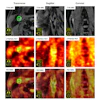
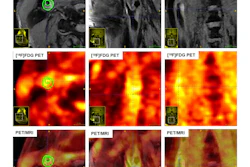
 A 70-year-old female patient with chronic low back pain. History of radicular syndrome which led to targeted nerve block with positive effect. However, lower back pain persisted. FDG-PET/MRI showed increased FDG uptake in a disc herniation at L5-S1 (SUVmax 1.6) convincing the treating physician to proceed to discectomy. After discectomy, the patient is now mostly pain free.Rianne van der Heijden, MD, PhD, and ISMRM
“This study is the first to acquire [follow-up] FDG-PET/MRI scans after treatment to assess the correlation between clinical outcome and FDG uptake,” the group wrote.
The study's primary limitation is the small sample size, and the authors noted that the results should be interpreted carefully, as the study assessed only short-term treatment effect and, in some patients, only a subset of potential pain generators was treated.
“F-18 FDG-PET/MRI has shown potential to identify pain generators and guide targeted treatment leading to improved clinical outcome corresponding with a reduction in FDG uptake at the targeted site,” Heijden and colleagues concluded.
Check out AuntMinnie’s full coverage of ISMRM 2026 on our ShowCast.