Women younger than 50 years old account for up to one in four of all breast cancers diagnosed from 2014 to 2024, according to research presented December 1 at the 2025 RSNA annual meeting in Chicago, IL.
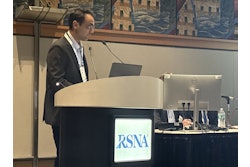
Stamatia Destounis, MD, from Elizabeth Wende Breast Care in Rochester, NY, discussed results from a study she and colleagues conducted that showed that most cancers found in this patient group were invasive.
“Consideration must be given by physicians caring for women in this age group to performing risk assessment in order to identify those who may benefit from more intensive screening due to being higher risk,” Destounis said in an RSNA statement.
While health guidelines generally recommend that women at least have the choice to start breast cancer screening at age 40, little to no guidelines are in place for younger women. Destounis and colleagues suggested that women in their 30s who are at high risk of breast cancer could benefit from mammography and MRI.
The researchers explored trends in cancer diagnosis between 2014 and 2024 in a New York-based community practice, which includes seven outpatient facilities. They identified all breast cancers in the 18 to 49 age group and collected information from clinical imaging reports. The study included 1,799 breast cancers diagnosed in 1,290 women in this age range.
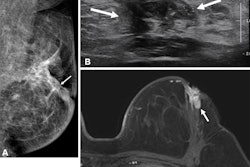
 A 40-year-old patient presents for routine screening with a family history of the paternal grandmother, age 55. Extremely dense breast tissue is noted on mammography right and left craniocaudal view.RSNA
Annual breast cancer diagnoses ranged from 145 cases to 196, with an average age of 42.6 years at diagnosis. Of the total cancers, 731 (41%) were detected on screening and 1,068 (59%) on diagnostic evaluation. The team found 1,451 invasive cancer cases (80.7%) and 347 (19.3%) noninvasive cancer cases.
Tumor grade distribution included the following: 347 (19.3%) low-grade, 790 (43.9%) intermediate-grade, and 593 (33%) high-grade. Also, 154 cancers (8.6%) were triple-negative. Age-stratified analysis showed that 423 cancers (24%) occurred in women under 40, and 1,376 (76%) in women ages 40 to 49.
Destounis said these findings show that breast tumors found in younger women are more often aggressive, and that younger women carry “a stable and substantial share” of breast cancer burden.
“That combination -- steady incidence plus disproportionately aggressive biology -- directly challenges age-based screening cutoffs and strengthens the case for earlier, risk-tailored screening approaches,” she noted.
Finally, Destounis said that younger women should be informed of how they can build awareness of their breast health, and that their decision about when to begin screening should include consideration of particular risk factors such as a strong family history, a genetic mutation, or certain racial and ethnic backgrounds.
For full coverage of RSNA 2025, visit our RADCast.