CHICAGO -- Molecular imaging will have a significant role in precision medicine, and radiologists will be at the forefront in ensuring the best patient outcomes.
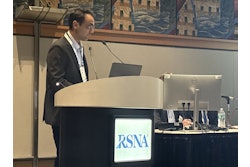
That was the message from RSNA President Umar Mahmood, MD, PhD, from the opening plenary session held November 30 at the RSNA annual meeting. Mahmood gave an overview of potential applications of imaging to care for patients at the molecular level, including the rise of theranostics.
“Radiology today is a different specialty than it was 10 years ago,” Mahmood said in his address. “And because of our hard work together, it’s going to be a different specialty 10 years from now.”
 RSNA president Umar Mahmood, MD, PhD, discusses current applications and advances in molecular imaging for precision medicine, CAR-T cell therapy being one.
Mahmood serves as chief of nuclear medicine and molecular imaging, director of the Center for Precision Imaging, and associate chair for imaging sciences in the Department of Radiology at Massachusetts General Hospital. He is also a professor of radiology at Harvard Medical School in Boston, MA.
Prior to joining the RSNA Board of Directors in 2017 as the liaison for international relations, Mahmood served in several roles. These include being a member of RSNA's R&E Foundation Board of Trustees, chairing the R&E Foundation's grant program, acting as vice chair of RSNA’s Committee on Scientific Affairs, and serving as an associate editor of Radiology, among others.
He also served as chair of the Board of Scientific Counselors of the Clinical Center of the National Institutes of Health (NIH). He is a fellow of the American College of Radiology (ACR), a fellow of the Society of Nuclear Medicine and Molecular Imaging (SNMMI), and has served on the SNMMI Board of Directors and as chair of the SNMMI Scientific Program Committee.
“With molecular imaging, we now routinely see lymph node metastases as small as 2 mm in prostate cancer, using prostate-specific membrane antigen-targeted PET probes,” Mahmood said.
He added that the ability of imaging to find and characterize disease directly affects individual patient care. And while today’s technology in radiology can image “dozens” of abnormalities and cancer, Mahmood predicted that “this will soon expand to hundreds of specific targets.”
Theranostics, meanwhile, will help advance this care by combining diagnostic and therapeutic approaches to create personalized cancer treatments, Mahmood added.
“By changing one radioactive atom in the imaging molecule for another, we can turn it into a tumor-killing molecule, turning a diagnostic into a theranostic,” he said.
Mahmood noted that for this to come to fruition, imaging leaders need to create a framework to simplify treatment and imaging strategies.
“We need to go from a lot to a little, to go from cells with 20,000 genes, 60,000 genetic elements, and millions of datapoints to a manageable structure,” he said.
Two strategies he briefly covered included bundling similarities into larger groups and using AI to pinpoint treatments.
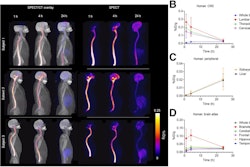
Mahmood said that imagers are among the first to witness how novel treatments interact with the human body and affect specific tumors. And knowledge from radiologists will be needed to advance these precision treatments, he added. Medical imaging can help view these effects in real time, including for oncolytic viruses designed to kill tumors, CRISPR gene editing technology, tumor vaccines, and CAR-T therapy.
“All radiology subspecialties are fundamental to these incredible advances for our patients,” Mahmood said.
Mahmood ended his address by thanking his family, friends, colleagues, and loved ones for his time as RSNA president and board member, as well as his time as a researcher.
Visit our RADCast for full coverage of RSNA 2025.